This imarku santoku knife review looks at a seven-inch kitchen knife built for everyday chopping, slicing, dicing, and mincing. Its hollow edge and Pakkawood handle are the main reasons to consider it for home cooking.
imarku Santoku Knife Review Summary
The quick verdict
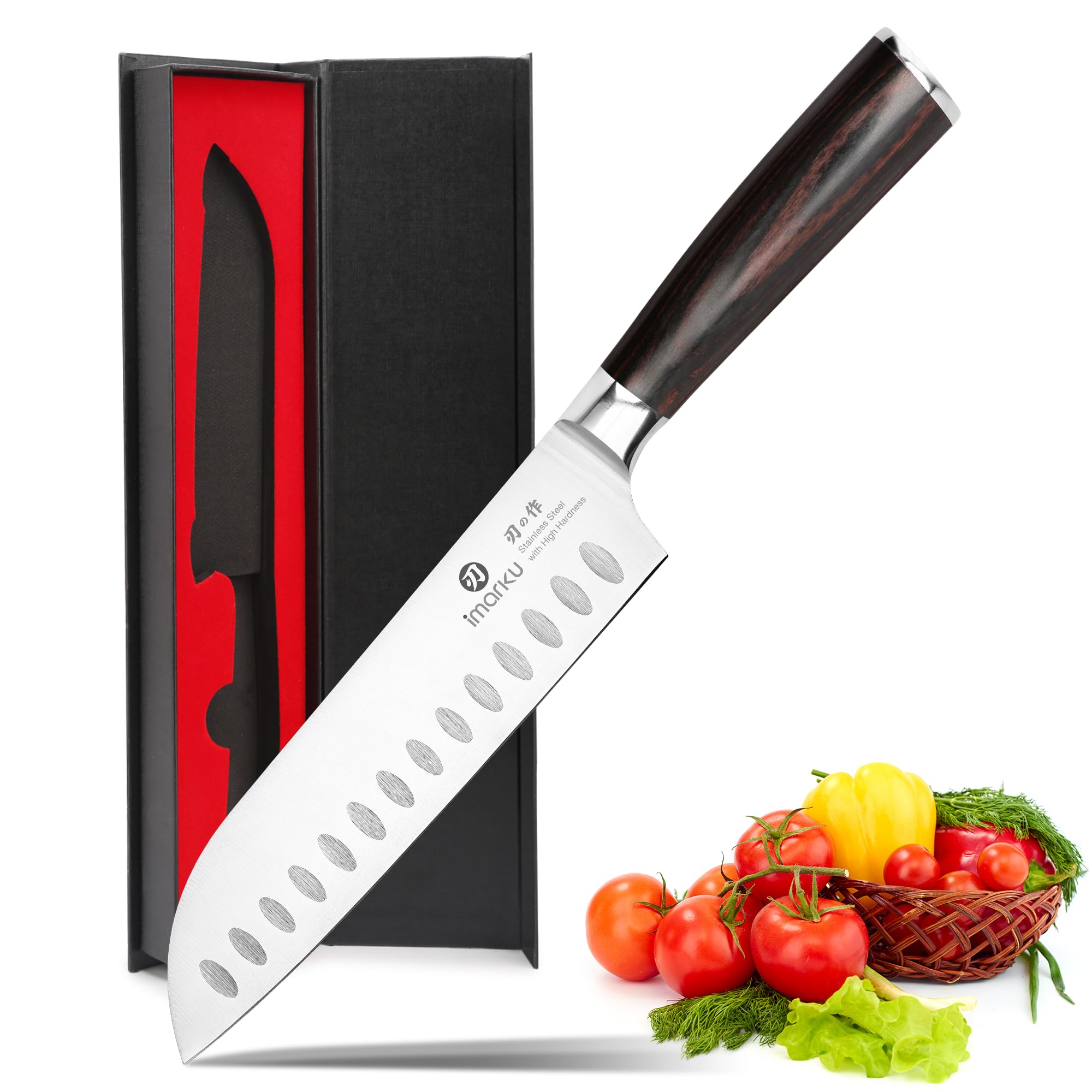
6,000+ ratings
Read Amazon Reviewsimarku Santoku Knife
A versatile santoku for cooks who want a seven-inch blade, a scalloped edge, and a Pakkawood handle for everyday prep.
- Seven-inch santoku blade in high-carbon stainless steel.
- Scalloped hollow edge designed to create a gap between the blade and food to help reduce sticking.
- Hand-polished edge specified at 15–18 degrees per side.
- Pakkawood handle designed to minimize wrist tension and provide a secure, comfortable grip.

Pros
- Versatile profile for common prep tasks and a range of ingredients.
- Hollow scallops are designed to help keep food from sticking to the blade.
Consider before buying
- The scalloped hollow edge and santoku profile may not suit cooks who prefer a plain-edged blade or another knife shape for their usual cutting technique.
- Packaging may vary during the brand refresh, so the received item's appearance may differ from the established presentation.
Read the full review summary
The imarku Santoku Knife pairs a high-carbon stainless steel blade with a scalloped hollow edge intended to leave a small gap between the blade and food.
That design is a practical fit for cooks who often slice or dice ingredients that tend to cling, while the seven-inch format covers a broad range of routine prep.
Its Pakkawood handle is shaped to provide a secure grip and reduce wrist tension, and the knife is presented as suitable for both home and restaurant kitchens.
Consider it if you want a versatile prep knife with a gift-box presentation; cooks who need a blade guard or prefer a different edge geometry should weigh those needs before choosing.
The buying factors
imarku Santoku Knife Scorecard
Editorial scores reflect listed features and buyer fit; they are not laboratory measurements or customer ratings.
Everyday versatility
The knife is suited to chopping, slicing, dicing, and mincing across meat, vegetables, fruit, and bread, which makes it useful for varied meal prep.
Blade material
High-carbon stainless steel is positioned as resistant to rust, corrosion, and discoloration, a useful combination for a frequently used kitchen knife.
Food-release design
The scalloped hollow edge creates a gap between blade and food, a feature intended to reduce sticking during slicing, dicing, and mincing.
Handle design
The Pakkawood handle is designed for a secure, comfortable grip and reduced wrist tension, supporting control through different hand sizes and grip positions.
Edge specification
A hand-polished edge at 15–18 degrees per side gives buyers a concrete edge-angle specification, but sharpness and retention still depend on care and use.
Gift presentation
The black gift box makes the knife easier to give as a kitchen gift, while the possible packaging refresh may mean the received presentation varies.
Key Features and Specifications of imarku Santoku Knife
- Seven-inch santoku blade in high-carbon stainless steel.
- Scalloped hollow edge designed to create a gap between the blade and food to help reduce sticking.
- Hand-polished edge specified at 15–18 degrees per side.
- Pakkawood handle designed to minimize wrist tension and provide a secure, comfortable grip.
- Intended for chopping, slicing, dicing, and mincing meat, vegetables, fruit, and bread.
- Gift box packaging; a brand refresh can change the item and packaging appearance.
Pros and Cons of imarku Santoku Knife
Pros
- Versatile profile for common prep tasks and a range of ingredients.
- Hollow scallops are designed to help keep food from sticking to the blade.
- Pakkawood handle is designed for a secure grip and lower wrist tension.
- High-carbon stainless steel resists rust, corrosion, and discoloration.
- Gift-box presentation is suitable for giving.
Consider before buying
- The scalloped hollow edge and santoku profile may not suit cooks who prefer a plain-edged blade or another knife shape for their usual cutting technique.
- If a blade guard is important for drawer storage or travel, confirm that your storage setup works for this knife before buying.
- Packaging may vary during the brand refresh, so the received item's appearance may differ from the established presentation.
Who Should Buy imarku Santoku Knife?
Good fit
Choose the imarku Santoku Knife for regular home prep when one blade needs to handle chopping, slicing, dicing, and mincing across vegetables, fruit, meat, and bread.
The seven-inch blade and hollow scallops are suited to cooks who value a versatile prep format and a design intended to reduce food sticking.
It also makes sense for someone seeking a kitchen gift: the knife comes in a black gift box, and its Pakkawood handle is designed for a secure, comfortable grip.
Keep in mind that new item and packaging versions may ship randomly during the brand upgrade.
Who should skip it
Skip it if your priority is a santoku supplied with a blade guard for drawer storage or camping; choose a storage solution that meets that need before settling on this knife.
It may also be a poor fit if you specifically want a plain-edged blade or a different knife profile, since this model's defining edge is scalloped and hollow.
imarku Santoku Knife: How Its Design Fits Everyday Prep
A versatile blade for routine cooking
This santoku is aimed at the jobs that make up everyday prep: chopping, slicing, dicing, and mincing.
Its stated ingredient range includes meat, vegetables, fruit, and bread, so it can serve as a general-purpose kitchen knife for cooks who prefer a santoku form.
Hollow scallops and food release
The scalloped hollow edge creates a gap between the blade and material being cut, with the aim of reducing sticking.
That may be useful for repeated slicing and dicing, though it does not remove the need to clear the blade when ingredients cling.
Edge and steel considerations
The hand-polished edge is specified at 15–18 degrees per side, while the high-carbon stainless steel is described as resisting rust, corrosion, and discoloration.
These details give buyers a clear sense of the blade's construction, but they do not substitute for suitable cleaning, storage, and sharpening habits.
Grip and ownership fit
The Pakkawood handle is designed to minimize wrist tension while providing a secure, comfortable grip across hand sizes and grip positions.
That makes the handle a key reason to consider this knife for longer prep sessions, though individual grip preference is personal.
Alternatives to imarku Santoku Knife
Santoku Knives alternative
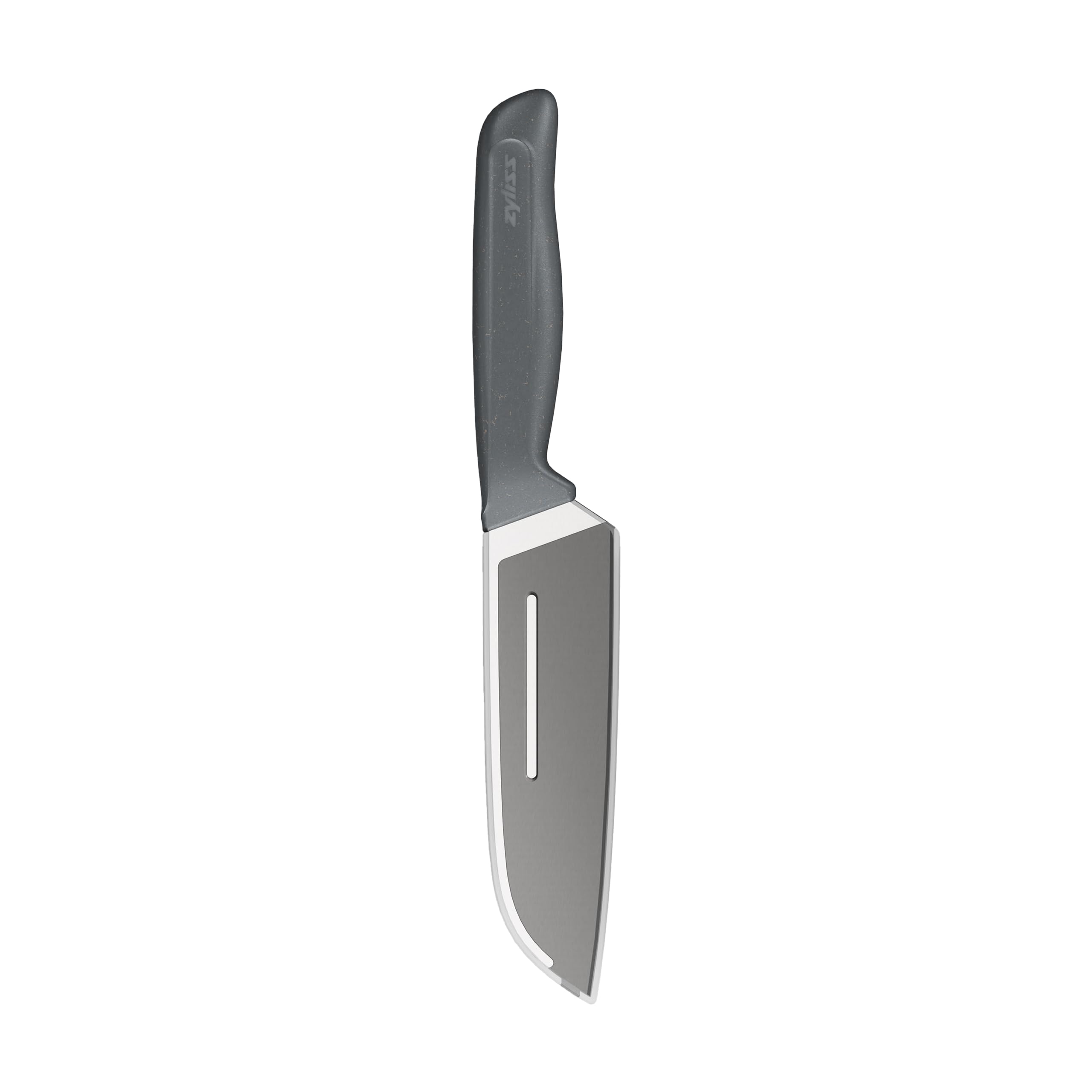
1,000+ ratings
Read Amazon ReviewsZyliss Comfort Santoku Knife
Prefer the Zyliss if the shorter 5.9-inch blade, supplied blade guard, or wet-hand grip design better matches your storage and handling priorities; choose the imarku if its seven-inch blade and hollow edge are a closer fit for your prep style.
- The Zyliss has a 5.9-inch santoku blade, a blade guard for camping or drawer storage, and a non-slip contoured handle intended to provide control with wet hands.
- The imarku uses a seven-inch blade with a scalloped hollow edge designed to help keep ingredients from sticking, and its Pakkawood handle is intended to provide a secure, comfortable grip.
Santoku Knives alternative
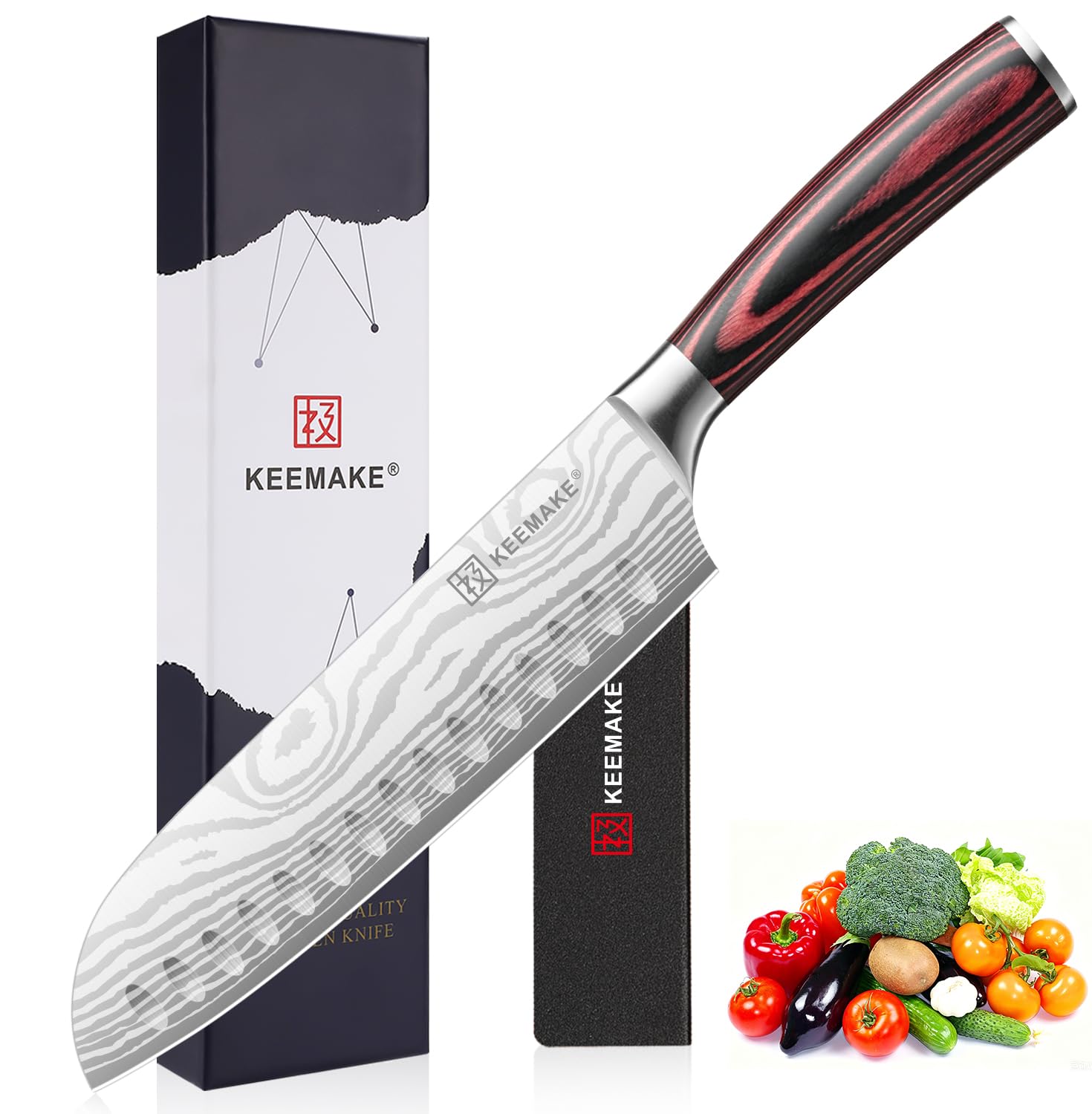
600+ ratings
Read Amazon ReviewsKEEMAKE 7" Santoku Knife
Choose the KEEMAKE if its hand-sharpened edge angle and flatter push-cutting profile suit your technique; the imarku is a fit if you prefer its hand-polished 15–18-degree edge and scalloped hollow design.
- The KEEMAKE has a hand-sharpened 12–15° edge per side, a wave-patterned blade intended to reduce food sticking, and a flatter edge suited to push cutting and board contact.
- The imarku's hand-polished edge is set at 15–18 degrees per side, and its scalloped hollow edge is designed to help reduce food sticking.
Is imarku Santoku Knife Worth It?
The imarku Santoku Knife is worth considering if you want a versatile seven-inch prep knife with high-carbon stainless steel, a scalloped hollow edge, and a Pakkawood handle.
Its design covers common chopping, slicing, dicing, and mincing tasks, while the hollow edge is intended to help ingredients release more readily.
It is a less suitable choice if a blade guard is central to your storage needs or if you want a plain edge rather than the scalloped design.
For cooks who like its santoku format and handle, the combination of everyday versatility and considered grip design makes it a practical candidate; expect packaging appearance to vary during the brand upgrade.
Your review at a glance
6,000+ ratings
Read Amazon Reviewsimarku Santoku Knife
A versatile santoku for cooks who want a seven-inch blade, a scalloped edge, and a Pakkawood handle for everyday prep.
- Seven-inch santoku blade in high-carbon stainless steel.
- Scalloped hollow edge designed to create a gap between the blade and food to help reduce sticking.
- Hand-polished edge specified at 15–18 degrees per side.
- Pakkawood handle designed to minimize wrist tension and provide a secure, comfortable grip.